
Junkyard Butcher — Cut to Order Cut to Order — No. 001
The Full Read

The Philosophy

The homepage gives you the pitch. This page gives you the reasoning underneath it — why the frameworks look the way they do, where the taste comes from, and what I actually believe about the work. If you're deciding whether this is a fit, or you're just doing your homework, start here.

Skip to the FAQ ↓

Fifteen sections. Tap a tile to read it.

01 I'm Gabe.
Gabe, founder of Junkyard Butcher
One operator, one department, no vendors who've never spoken to each other.

I didn't build Junkyard Butcher because I wanted another creative agency.

I built it because I kept finding myself in the middle of problems bigger than the job I was originally given. A camera job became content. Content became marketing. Marketing became strategy. Strategy became figuring out why something wasn't working in the first place.

The more I worked inside businesses, the more I noticed the same thing: there was usually more value there than anyone was looking for. Old content. Existing customers. A story nobody had bothered to tell properly. A piece of creative that almost worked. A brand with something real underneath all the polish. I got interested in that part — not just making the thing, but figuring out what the thing actually needed. That's where Junkyard Butcher came from.
02 Cut to Order.

Nothing is owed. Everything is built.

I've never been particularly interested in adding things just to make a project look bigger. More content isn't automatically better. More platforms aren't automatically better. More equipment isn't automatically better. More people aren't automatically better.

Sometimes you need more. Sometimes you need to cut half of it away. The hard part is knowing which. That's become the way I approach creative work: look closely, make the decision, cut to it, build from there.

03 Why Junkyard. Why Butcher.

The name is two trades stitched together on purpose.

A junkyard is full of things people decided were finished. Sometimes they're right. Sometimes there's still something worth pulling out — a part that works, a piece worth rebuilding, something useful buried underneath everything nobody else wanted. That's the junkyard.

The butcher doesn't create the animal. The value is already there. The craft is knowing where to cut. Put the two together and you get the way I see the work: I don't assume everything needs to be replaced. I look at what's already there, then I decide — keep it, fix it, cut it, rebuild it. That's the job.

04 Dig Before You Build.

A lot of marketing starts with: what should we make? I start somewhere else: what do we already have?

Maybe it's years of content. A neglected audience. An email list nobody's using properly. A visual identity that's still good. A product people already care about. A campaign that performed better than expected. Or maybe the honest answer is that most of it needs to go — that's useful too, because the point isn't saving everything, it's knowing what you're working with before you spend more money creating something new. I've seen enough businesses buy their way around problems that could have been solved by paying attention.

At CVALT, what started as content and marketing eventually meant looking across the entire customer journey — from how people discovered the brand to how they were reached, retained, and brought back. That experience changed how I look at the work. The problem is rarely isolated to the thing sitting directly in front of you. Dig first.

05 Taste Is Part of the Strategy.

This is where creative and marketing stop being separate things.

Strategy tells you what needs to happen. Taste helps you recognize what shouldn't. It's knowing when a sentence is trying too hard. When a visual is beautiful but says nothing. When "professional" has become another word for forgettable. When consistency has turned into sameness.

You can optimize something until there's nothing left to recognize. You can make something technically perfect and completely forgettable. The work has to function — but it also needs a point of view. A decision should be visible somewhere in the work.

06 Authenticity Isn't a Filter.

I've never believed authenticity means making something look rough. Rough can be just as manufactured as polished. Dark isn't automatically interesting. Clean isn't automatically better. And a different font doesn't make a different point of view.

Authenticity is harder than aesthetics. It comes from having something real underneath the presentation. That's what I'm looking for in brands — not manufactured weirdness, not whatever the category says a brand is supposed to look like. The thing that's already yours. Then we stop sanding it down.

07 People Before Platforms.

Platforms change. People don't.

The feed changes. The algorithm changes. The interface changes. People still want to discover something worth caring about. They still remember how a brand made them feel. They still talk about things that give them a reason to talk.

I've worked across social, email, SMS, campaigns, events, content and paid media. The channel has never been the part that interests me most — the relationship does. I'd rather build an audience that actually shows up than collect numbers that look good in a screenshot. Attention gets you noticed. Trust gets you remembered.

08 Repetition Builds Edge.

Photography taught me to look. Skating taught me to commit.

Marketing taught me to pay attention to what happens after the idea leaves your head. All three taught me the same thing: you don't get good by getting it right once. You shoot it again. Rewrite it. Cut the weak part. Try another angle. Watch what happens. Do it again.

Skating made that lesson pretty literal. Pick a line. Commit. Miss. Get up. Try again. Eventually someone sees the landing and thinks it looked easy. They didn't see the attempts. That's the part I respect — the work behind the work.

09 The 7-11-4, In Full

The short version, from the homepage: a buyer needs roughly seven hours of content, across eleven touchpoints, on four different platforms, before they trust a brand enough to hand over money. It's Google's research rather than ours, and a rule of thumb rather than a law of physics — but it's a useful one, because it explains why a single great post rarely converts anything on its own.

In practice, that means planning touchpoints on purpose instead of leaving them to chance: an event recap video that also becomes three social cuts and an email send; an SMS flow that picks up where the inbox left off; a presence across enough different channels that a prospective client runs into the brand more than once before they ever reach out. The frameworks aren't about producing more content — they're about making sure the content that already exists is actually stacking toward something instead of disappearing into a single feed the day it posts.

10 The 80/20 Hybrid, In Full

Twenty percent of what a brand already does drives eighty percent of its results. That's true of content formats, of email flows, of entire product lines — and almost no one has actually measured which twenty percent it is for them.

So before anything new gets created, the existing library gets audited against real numbers: which recap videos actually got watched to the end, which email sends actually got opened and clicked, which single post quietly outperformed everything else that quarter. That twenty percent gets doubled down on, refined, and repeated on purpose. Everything else gets cut loose — not because it was bad, necessarily, but because attention and budget both compound faster when they're concentrated instead of spread thin trying to maintain everything at once.

The frameworks above describe how I think. The Lifecycle Operating System is the operational version — fourteen stages covering what happens between the moment attention arrives and the moment a relationship is allowed to end.
11 Minimal Gear, Maximum Intent.
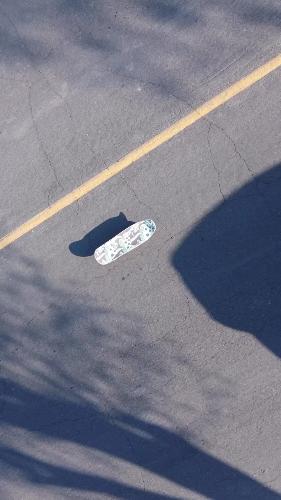
A skateboard on cracked asphalt, casting a long shadow
Same instinct as the work: one board, no team, find the line and commit to it.

I've spent enough time around cameras to know the expensive one isn't automatically the right one. Sometimes the right tool is the best tool. Sometimes the right tool is the thing already in your hand. A camera doesn't create the shot. A lens doesn't create the composition. A production budget doesn't create the idea.

Tools expand what's possible. They don't replace knowing what you're trying to say — and that goes for everything in the kit, old or new. The standard doesn't change based on what's doing the work: does a real decision sit behind this, or did it get templated out the door because templating's faster? Cut to order, not off the rack, whatever's doing the cutting. That's why I like limitations — they force decisions, and decisions are where the work starts to become yours.

12 The Numbers Still Matter.

None of this means ignoring data. Quite the opposite.

I've spent years watching what happens after the creative leaves the room — what people click, what they ignore, what brings them back, what turns into a sale, what quietly outperforms the thing everyone expected to win. Numbers matter because reality gets a vote. But a number is an observation, not a strategy.

The useful question isn't "did it work?" It's "what did it teach us?" Then you adjust. That's the same discipline behind the 7-11-4 and the 80/20 hybrid, above — neither is a rule, both are what the numbers kept teaching us.

What this looks like built. The Route is one deployment of that system across email and SMS, with the figures a single engagement produced.
13 Where This Comes From

Not from a book. From a skatepark and a job nobody meant to give me.

Skating. You pick a line, you commit to it, and most of the time you don't land it. Then you get up and go again, and the twentieth attempt looks effortless to anyone who arrived late. That's the whole job. The work that looks like it came easily is the work that got run at the most times, and the willingness to look stupid in the middle of it is not a personality trait — it's the actual skill.

Being the contractor who ended up running the department. I was brought into CVALT to do one thing, and then that thing became another thing, then another, until I was responsible for the app listing, the packaging, the sends, the whole brand. Not because I pitched for it, but because somebody had to see all of it at once. A content person sees content. A designer sees design. A marketer sees campaigns. A business owner sees the bottom line. Four people can each do their job correctly and still produce something that doesn't work, because none of them had the full picture — and nobody could tell which twenty percent was carrying the other eighty. That's where the frameworks on this page come from: not theory, but the specific experience of being the only person in the room who could see the whole thing.

Junkyards. Every one I've been in is full of things that still run, priced as scrap because nobody bothered to check. Most brands are the same. The instinct to go looking before going shopping isn't frugality — it's that what you already built is the only material nobody else can copy.

14 This Is Junkyard Butcher.

Not a collection of services. Not a dark aesthetic wrapped around a portfolio. Not a reason to make more things.

It's a way of working. Look harder. Understand what you're actually working with. Find what's worth keeping. Cut what's getting in the way. Make the decision. Build the thing. Then pay attention to what happens.

That's why the name still fits. The junkyard is the material. The butcher is the judgment. The work is what happens after.

15 Frequently Asked
What does Junkyard Butcher actually do?

Four things, applied together instead of handed off between separate vendors: content creation (video and social, especially event recap), email & SMS marketing, brand identity systems, and brand strategy systems. Most client work has been event recap and social content for cannabis and events brands; one engagement (CVALT) covered the entire marketing and creative department.

What is the 7-11-4 framework?

A rule of thumb for how much trust a buyer needs before they purchase: roughly seven hours of content, across eleven touchpoints, on four different platforms. It's used here to plan content and lifecycle touchpoints on purpose instead of leaving reach to chance.

What is the 80/20 hybrid model?

An application of the Pareto principle to existing brand assets: audit what already exists, identify the roughly twenty percent of content, formats, or flows driving most of the results, and double down there before creating anything net-new.

Does the work rely on templates or automated tools?

Where a tool genuinely helps, it gets used — same as a camera or a laptop. What doesn't happen is shipping something nobody actually thought through. Direction, editing, and final judgment stay human on every deliverable.

What kind of brands is this a fit for?

Brands that care about craft and authenticity over churning out volume — a lot of the past work has been cannabis delivery, dispensary, and events brands, but the frameworks and services aren't industry-specific.

How is this different from a typical agency?

One operator working across content, identity, and lifecycle marketing instead of a project getting split across siloed teams who've never talked to each other — and a systems-driven process (the 7-11-4 and 80/20 hybrid) instead of an ad hoc one.